You type “best pizza near me” into Google. Within half a second, you see a list of restaurants, complete with ratings, photos, and directions. Feels like magic, right?
But here’s what actually happened: Google didn’t just start searching the entire internet the moment you hit enter. That would take forever. Instead, it already knew about those pizza places. It had visited their websites weeks ago, cataloged every page, analyzed the content, and ranked them based on hundreds of factors.
This process of finding, organizing, and ranking billions of web pages is how search engines work. And understanding it changes everything about how you create content, build websites, and get found online.
This article breaks down search engine basics in simple language, explains how web searches work step by step, and shows what actually helps a website get discovered, indexed, and ranked.
What Is a Search Engine?
A search engine is a software system designed to search for information on the Internet. It collects data from across the web, organizes it, and delivers the most relevant results when someone searches.
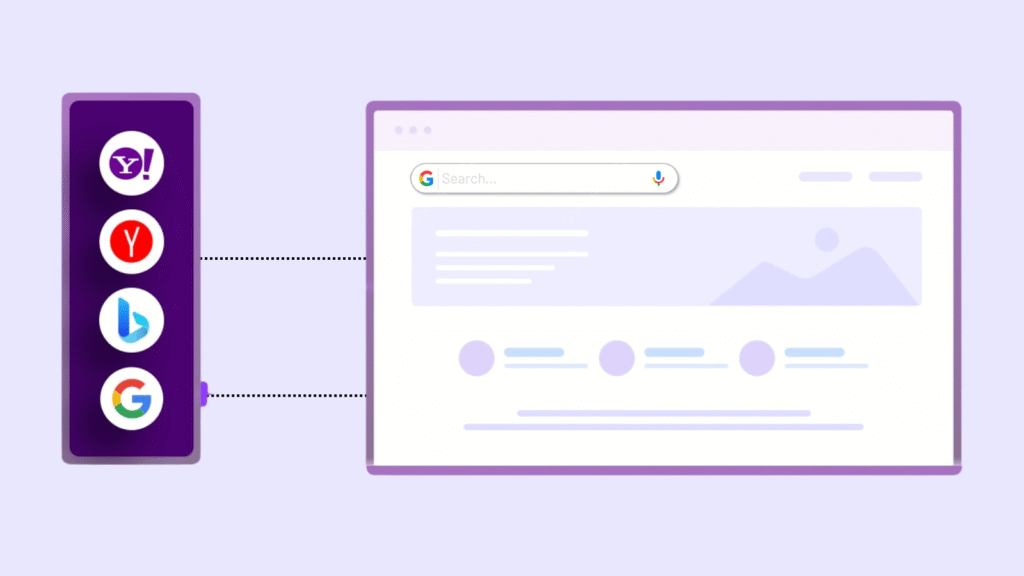
Google handles over 8.5 billion searches per day. Bing, Yahoo, DuckDuckGo, and others add billions more. But they all follow the same fundamental process: crawling, indexing, and ranking.
Think of a search engine like a massive library. But instead of you browsing shelves, a team of librarians (web crawlers) constantly visits every book in the world, reads them, creates detailed notes (index), and organizes everything so when you ask a question, they instantly know which books have your answer (ranking).
The Three-Stage Process: How Search Engines Actually Work

Every search engine operates through three distinct stages. Miss one stage, and your website stays invisible.
1. Crawling: Discovering the Web
Crawling is the process where search engines discover new and updated content on the internet.
Search engines deploy automated programs called crawlers (also known as spiders or bots). Google’s crawler is called Googlebot. Bing uses Bingbot. These bots systematically browse the web, jumping from link to link, discovering pages.
Here’s how it works step by step:
- The crawler starts with a list of known URLs. These come from previous crawls, sitemaps submitted by website owners, and pages linked from other sites.
- It visits a page and downloads the HTML code. The bot doesn’t see your website the way you do—no beautiful design or images loading smoothly. It sees raw code. Crawlers excel at reading text-based content—HTML, CSS, and increasingly JavaScript. They can follow links and understand site structure. But crawlers struggle with content behind login forms, pages blocked by robots.txt files, images without alt text, and content loaded through complex JavaScript frameworks.
- It finds all the links on that page. Every hyperlink becomes a potential new page to visit. This is why internal linking matters; it helps crawlers discover your entire site.
- It adds new URLs to the crawl queue. The bot adds undiscovered links to its list and continues the process across billions of pages.
- It returns periodically to check for updates. Popular sites get crawled multiple times per day. Smaller sites might be crawled weekly or monthly.
2. Indexing: Organizing the Information
After crawling comes indexing—the process of analyzing and storing content in a massive database.
When Googlebot crawls your page, it doesn’t just save the URL and move on. It processes everything:
- Content analysis: Every word, every heading, every sentence gets analyzed. The search engine identifies the main topics, understands context, and determines what your page is actually about.
- Keyword identification: Search engines note which terms appear, how frequently, and where they’re located (titles, headings, body text). But modern indexing goes far beyond simple keyword matching.
- Structure mapping: The engine understands your heading hierarchy, how paragraphs connect, which sections matter most. A well-structured page with clear H1, H2, and H3 tags helps search engines understand your content faster.
- Link analysis: Every internal and external link gets recorded. Links signal relationships between topics and help establish authority.
- Media processing: Images get analyzed through file names, alt text, and surrounding content. Videos are understood through titles, descriptions, and transcripts.
- User experience signals: Page speed, mobile-friendliness, security (HTTPS), and other technical factors get noted during indexing.
Google’s index contains hundreds of billions of web pages, consuming hundreds of petabytes of data. When you search, you’re not searching the live web, you’re searching this pre-built index.
3. Ranking: Determining What Appears First
You’ve been crawled. You’ve been indexed. Now comes the moment of truth: where do you appear when someone searches?
Ranking is the process of ordering search results by relevance and quality. Google uses over 200 ranking factors. Bing and other engines use similar systems. No one outside these companies knows every factor, but we understand the major ones.
- Relevance matching: Does your content actually answer the search query? If someone searches “how to change a tire,” a page about tire brands won’t rank well, even if it mentions tires dozens of times. Search engines use natural language processing to understand intent, not just keywords.
- Content quality: Search engines evaluate expertise, authoritativeness, and trustworthiness (E-A-T). Is your content accurate? Do you cite sources? Is the information comprehensive or superficial?
- Page experience: Does your page load quickly? Is it mobile-friendly? Are there intrusive pop-ups? These factors directly impact ranking because they affect user satisfaction.
- Backlink profile: How many other websites link to yours? More importantly, are those sites authoritative and relevant? A link from The New York Times carries more weight than a link from a random blog.
- Freshness: For certain queries (news, current events, trending topics), newer content ranks higher. For evergreen topics (how-to guides, definitions), age matters less.
- User behavior signals: Search engines monitor how people interact with results. If users consistently click your result and stay on your page, that’s a positive signal. If they immediately return to search (called “pogo-sticking”), that hurts your ranking.
- Personalization factors: Your location, search history, and device type influence what you see. Someone searching “pizza” in New York sees different results than someone in Tokyo.
The ranking algorithm processes all these factors in milliseconds, creating a customized results page for every single search.
The One Thing Every Website Owner Must Remember
Before you optimize anything, ask yourself: “Am I making this easier for search engines to understand and users to benefit from?”
Search engines don’t exist to rank your website. They exist to help people find valuable information. The better your content serves that goal, the better you’ll rank.
A technical SEO expert might obsess over structured data and crawl efficiency. But the restaurant owner who simply writes honest, helpful reviews of their menu items might outrank them because they’re genuinely solving what people search for.
When you align your content with genuine user needs and make it accessible to search engines through proper structure and technical setup, ranking becomes the natural result.
Ready to Get Found?
Understanding search engines transforms how you approach online visibility. You’re not gaming a system; you’re learning how the library works so you can make sure your book sits on the right shelf.
Start simple: Make sure your site can be crawled. Create genuinely useful content. Build a logical structure. The complex optimization can come later.
Want to see how search engines view your site? Use Google Search Console to check your indexing status, submit your sitemap, and identify crawl errors. It’s free, directly from Google, and shows exactly what needs fixing.
The web has billions of pages. Search engines process trillions of searches per year. Your goal isn’t to trick the algorithm, it’s to earn your place in results by creating something worth finding.